Famous, cool,
inspirational, funny,
love, life, great and other
quotes from movies,
books, bible and
more

Main Menu

Find Quote

Calendar

It could be inferred from President Roosevelt's public statements that the Japanese attack on Pearl Harbor had come as a complete surprise to his administration - that it had not been, and could not have been, anticipated. . . . 'The United States was at peace with that Nation [Japan] and, at the solicitation of Japan, was still in conversation with its Government and its Emperor looking toward the maintenance of peace in the Pacific. Indeed one hour after Japanese air squadrons had commenced bombing in the American Island of Oahu, the Japanese Ambassador to the United States and his colleague delivered to our Secretary of State a formal reply to a recent American message. And while this reply stated that it seemed useless to continue the existing diplomatic relations, it contained no threat or hint of war or of armed attack. It will be recorded that the distance of Hawaii from Japan makes it obvious that the attack was deliberately planned many days or even weeks ago. During the intervening time the Japanese Government has deliberately sought to deceive the United States by false statements and expressions of hope for continued peace.'

Wednesday
Feb 11, 2026

Quotes: 53419
Authors: 9969

Selected Quote

Quote Author: Ralph Waldo Emerson

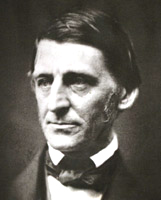
Ralph Waldo Emerson

Ralph Waldo Emerson

Ralph Waldo Emerson (May 25, 1803 - April 27, 1882) was an American essayist, poet, and leader of the Transcendentalist movement in the early 19th century.

Emerson gradually drifted from the religious and social doctrines of his peers, formulating and expressing the philosophy of Transcendentalism in his 1836 essay, Nature . As a result of this ground breaking work he gave a speech entitled The American Scholar in 1837, which is considered to be America's "Intellectual Declaration of Independence." He once said "Make the most of yourself, for that is all there is of you."

Considered one of the great orators of the time, Emerson's enthusiasm and respect for his audience enraptured crowds. His support for abolitionism late in life created controversy, and he was subject to abuse from crowds while speaking on the topic. When asked to sum up his work, he said his central doctrine was "the infinitude of the private man."

Other Ralph Waldo Emerson Quotes